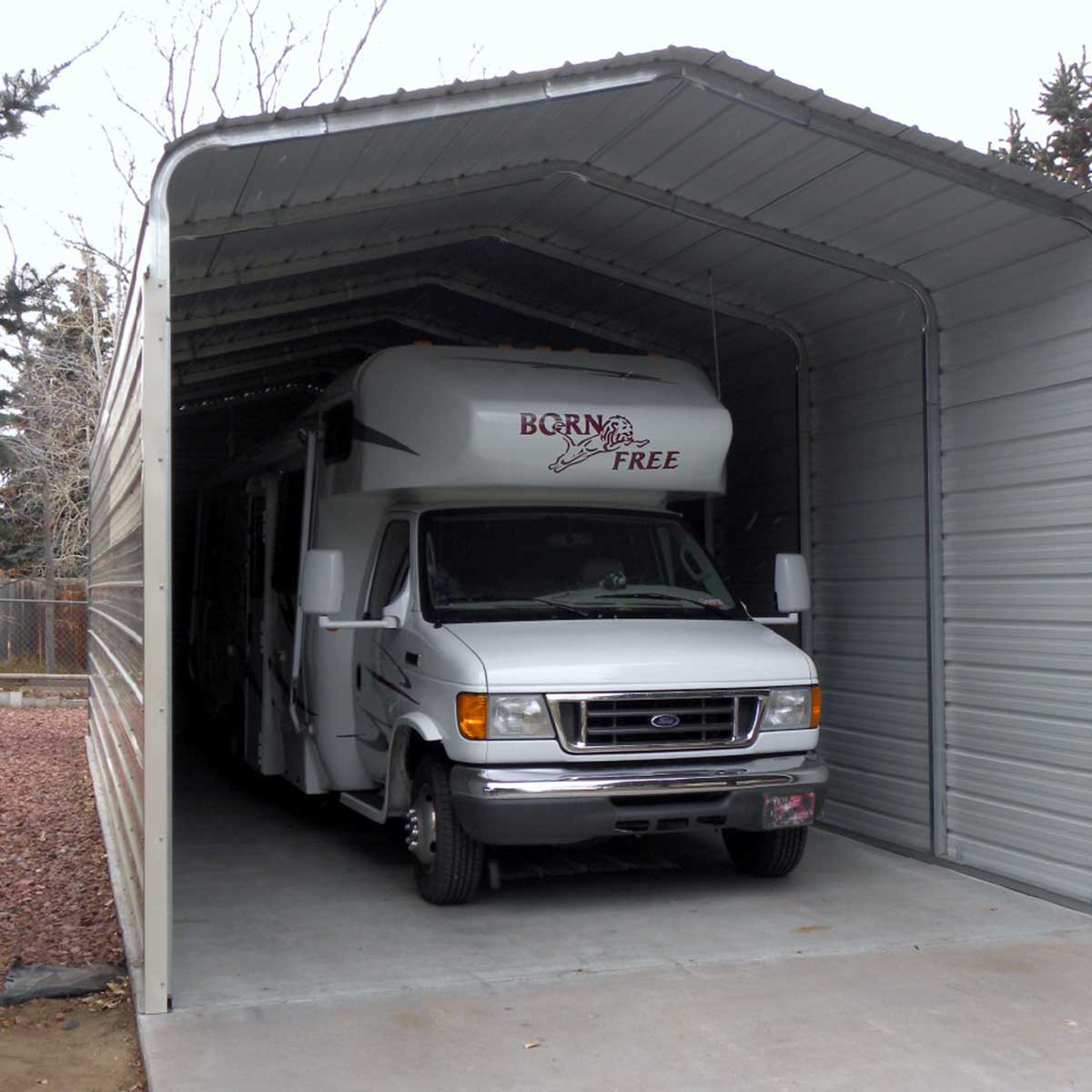
An RV is a significant investment, and protecting it from the Texas sun, rain, and other weather is one reason many owners consider adding a metal RV carport to their property. But choosing the right size is important. A cover that is too short, too narrow, or too low can make parking difficult and leave portions of your RV exposed.
Whether you own a travel trailer, fifth wheel, Class A motorhome, or smaller camper, the best place to start is with your RV's actual dimensions. You'll also want to consider how you use it, how much room you need to maneuver, and whether you might upgrade to a larger RV in the future.
Here's what to consider when planning an RV carport in Texas.
1. Start With Your RV's Actual Dimensions
Before choosing a carport, measure your RV in three directions: length, width, and height.
These measurements will determine the minimum size you'll need, but they shouldn't necessarily be the final dimensions of your structure.
RV manufacturers publish specifications for their vehicles, but those numbers don't always include everything that adds to the overall footprint. Other things can change the measurements, such as:
- Rooftop air conditioners,
- antennas,
- ladders,
- spare tires,
- rear-mounted accessories,
- and other equipment.
Take measurements of your RV as it sits, including permanently attached accessories.
Length: Measure from the very front to the very back, including the hitch on a travel trailer or fifth wheel. Don't rely exclusively on the advertised model length.
Width: Measure the widest part of the RV, including extended mirrors or other permanently attached equipment where applicable. If your RV has slide-outs, measure with them extended as well. You'll need to decide whether you want the slide-outs protected while extended or whether they'll only be extended when the RV is parked outside the cover.
Height: Measure from the ground to the highest point of the RV. Include rooftop air conditioners, antennas, satellite equipment, and other accessories. If your RV has adjustable suspension or other equipment that changes its height, account for that too.
It's a good idea to measure more than once. A few extra minutes with a tape measure can prevent an expensive sizing mistake.
2. How Tall Should an RV Carport Be?
Height is one of the most important considerations when selecting an RV cover. A structure that is too low can make it difficult or impossible to pull your RV underneath.
Many travel trailers and smaller motorhomes are between 10 and 12 feet tall. Larger fifth wheels and Class A motorhomes can reach 13 to 14 feet or more, depending on their equipment and configuration.
As a general planning guideline, allow at least 12 to 18 inches of additional clearance above your RV's highest point. More clearance may be desirable if you have rooftop equipment, an uneven approach, or expect to own a taller RV in the future.
Remember that the advertised height of a carport isn't necessarily the same as its usable clearance.
For example, an RV carport may be advertised with a 14-foot eave height. The actual clearance beneath the frame can be somewhat different depending on the building's design, width, and roof configuration. Take a look at some RV carport pictures, and note how the trusses can differ, offering extra interior height above the eave height.
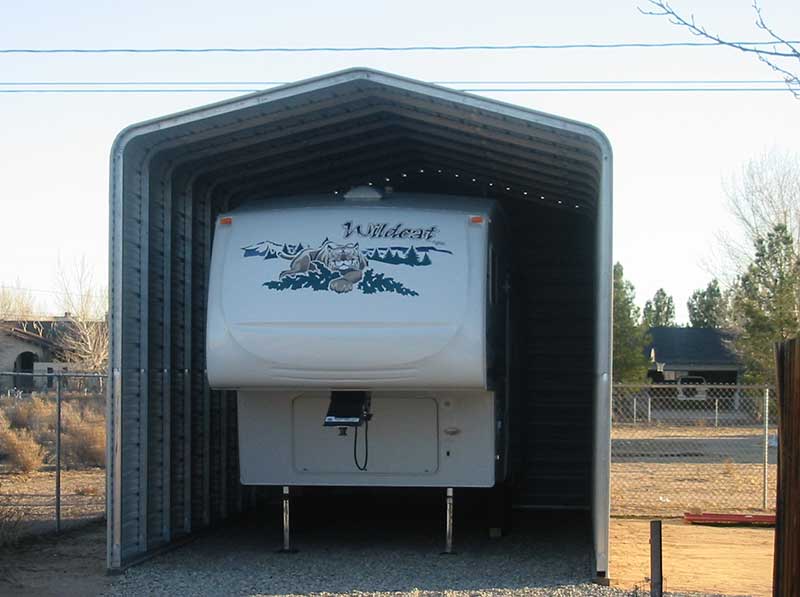
Ask the manufacturer to confirm the usable clearance at the point where your RV will enter and park. This is especially important for taller fifth wheels and Class A motorhomes.
3. How Wide Should Your RV Carport Be?
A carport should provide enough width to accommodate your RV comfortably without making parking a tight squeeze.
A standard RV may be approximately 8 feet wide, but that's only the starting point. You'll want additional room on both sides for maneuvering, opening storage compartments, walking around the vehicle, and performing routine maintenance.
Here are some general planning considerations:
- 12 feet wide: May work for a smaller camper or narrow travel trailer, but offers limited room around the vehicle.
- 14 feet wide: A reasonable starting point for many single-RV applications.
- 16 feet wide: Provides more room for larger RVs and easier access along the sides.
- 18 to 20 feet wide: Worth considering for larger motorhomes, fifth wheels, or owners who want additional working and storage space.
These are starting points, not universal sizing requirements. The best width depends on your RV, the location of its slide-outs, and how much room you want around it.
One detail that is easy to overlook is the location of the support posts. Make sure the posts won't interfere with mirrors, doors, slide-outs, or the path you use to maneuver into the structure.
If you plan to store additional equipment, such as a motorcycle, golf cart, or lawn tractor, consider that when determining the overall width.
4. How Long Should an RV Carport Be?
Length is another area where it pays to allow some extra room.
Your RV needs to fit completely beneath the roof, but you'll also want enough space to pull in and park without having to position the vehicle perfectly every time.
For example, a 32-foot motorhome would be a tight fit in a 32-foot-long structure. A longer cover gives you room to maneuver and helps protect the front and rear of the RV.
As a general guideline, consider adding 3 to 5 feet to your RV's actual overall length. More may be appropriate if you want room for additional equipment or storage.
Also consider what you might want to store underneath the carport in the future. Some RV owners use the extra space for:
- A motorcycle or ATV
- A small utility trailer
- Outdoor furniture
- Camping equipment
- Lawn and garden tools
- A workbench or storage cabinets
Absolute Steel offers RV carports in a variety of lengths, with standard lengths beginning at 20 feet and increasing in increments of 4 or 5 feet. Longer structures can also be manufactured to accommodate specific projects.
5. Don't Forget About Slide-Outs, Awnings, and Accessories
The RV itself isn't always the full footprint you need to consider.
Slide-outs can extend several feet beyond the side of the vehicle. Awnings can extend even farther. If you want to use these features while the RV is parked beneath the carport, you'll need to account for their additional space.
Think about how you intend to use the cover.
If the RV will simply be parked underneath for long-term storage, you may only need enough room for the vehicle itself and convenient access to its doors and compartments.
If you plan to use the RV while it's parked beneath the structure, you'll want to consider:
- Whether slide-outs can be fully extended.
- Whether the awning can be opened.
- Whether exterior storage compartments can be accessed.
- Whether there's enough room to walk around the RV.
- Whether you can comfortably connect utilities or perform maintenance.
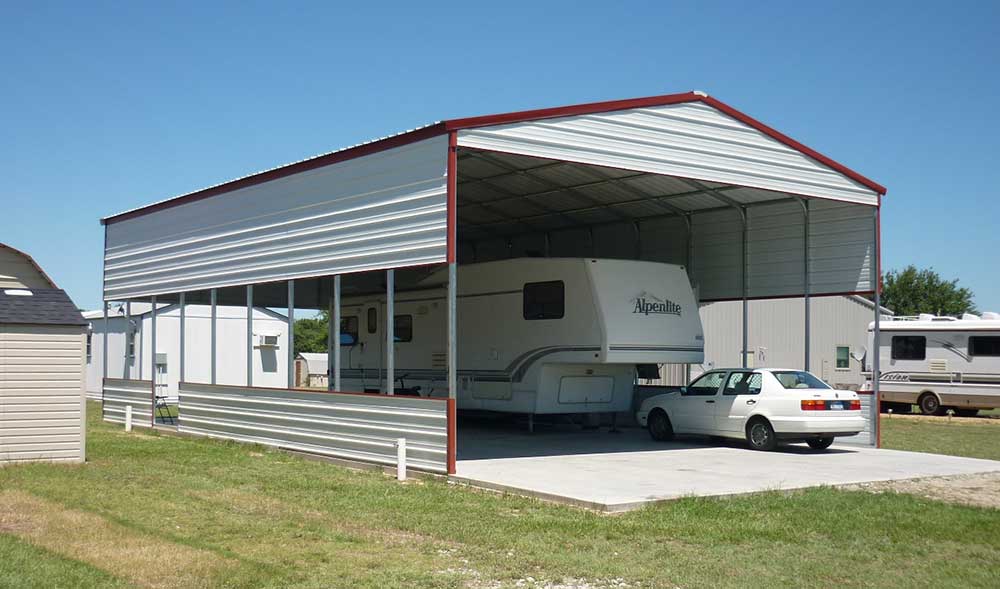
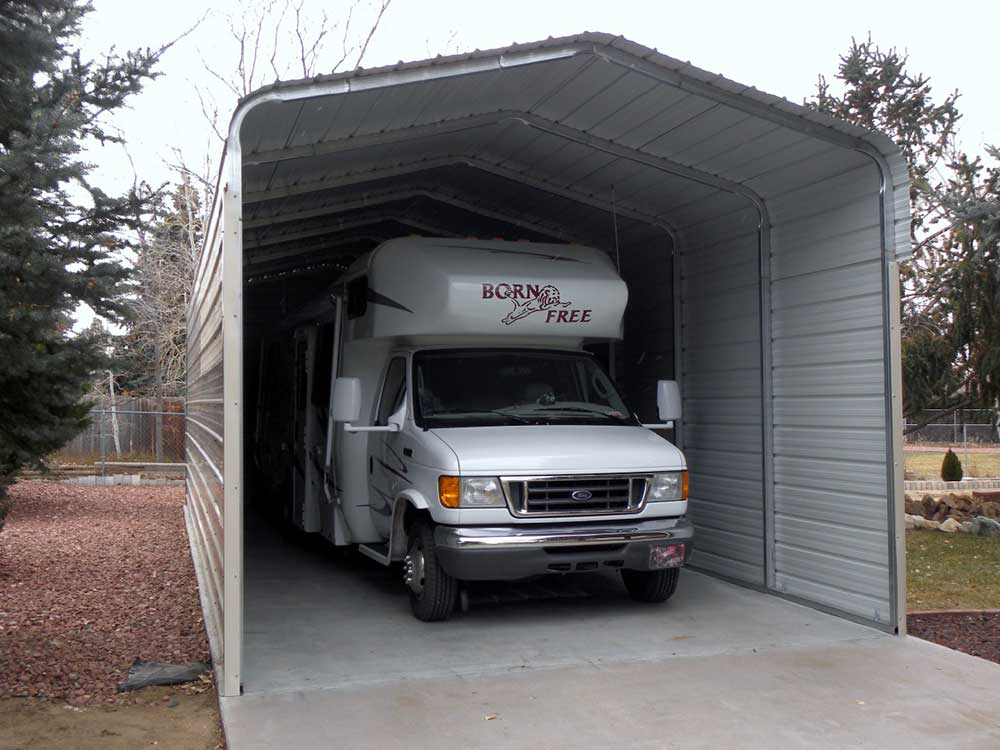
You may also want to consider optional side panels (as shown in above picture). These can provide additional protection from wind-driven rain and afternoon sunlight, depending on the direction your carport faces.
6. Choose a Location That Works for Your Property
The location of your RV carport can be just as important as its dimensions.
Before choosing a spot, consider how you'll get the RV into and out of the structure. A large motorhome or fifth wheel needs adequate turning room, a suitable driveway, and enough space to approach the carport without having to make difficult maneuvers.
Look at the ground, too. A relatively level, properly prepared site makes installation and everyday use easier. If the site slopes, the manufacturer or installer should evaluate how that affects the structure, anchoring, and usable clearance.
In Texas, it's also worth thinking about the direction of the afternoon sun and prevailing weather. A carport with optional side panels may offer additional protection from direct sunlight and wind-driven rain.
Finally, check local requirements before ordering. Building permits, setbacks, property restrictions, and wind-load requirements can vary by city, county, and location. Make sure the structure is designed for the conditions at your specific property.
7. Should You Choose an Open RV Carport or Add Side Panels?
An open-sided RV carport is often a practical choice when the primary goal is to provide shade and overhead weather protection.
It allows easy access from either side, makes parking simpler, and provides plenty of ventilation.
However, adding side panels can provide additional protection from wind, rain, and direct sunlight. You can choose to enclose one side, both sides, or additional portions of the structure depending on your needs and the available configurations.
Another option is a partially enclosed structure with a combination of covered parking and storage space. This can be especially useful if you want to keep camping supplies, tools, or other equipment close to your RV.
The right configuration depends on your property, budget, and intended use. It's worth discussing these options before finalizing the dimensions.
8. Think About Your Next RV, Too
If you're planning to keep your current RV for many years, sizing the carport to fit it makes sense.
But what if you're thinking about upgrading?
Many RV owners eventually move from a smaller travel trailer to a fifth wheel or from a Class C motorhome to a larger Class A. If that possibility is on your radar, consider building a little extra room into your project now.
A taller or wider structure may cost more initially, but it can prevent the need to replace or modify the carport later.
You don't necessarily need to build the largest structure your property can accommodate. Just think about your likely future needs before settling on the final dimensions.
Planning Your RV Carport With Absolute Steel
Absolute Steel manufactures steel RV carports and shade shelters in Texas, offering a variety of sizes, styles, and configurations.
Our RV covers are available in widths up to 40 feet, with standard lengths starting at 20 feet. Eave heights can range from 7.5 to 15.5 feet, depending on the configuration. Custom sizing is also available for projects that require something outside the standard options.
You can choose an open-sided structure or add optional side panels for additional protection. Different roof styles and frame configurations are available to accommodate a variety of applications.
The best way to get started is to have your RV's measurements handy before requesting a quote.
Before contacting us, gather these details:
- Overall length, including hitch or other extensions
- Overall width
- Overall height, including rooftop equipment
- Desired carport width and length, if known
- Whether you want open sides or additional panels
- Your project ZIP code (helps with freight calculation)
You don't need to have every detail figured out before contacting us. We can help you work through the sizing and configuration options.
Visit our RV Carports and Shade Shelters page to explore available styles and configurations, or contact Absolute Steel to discuss your project.
A little planning now can make a big difference in how well your RV carport serves you for years to come.